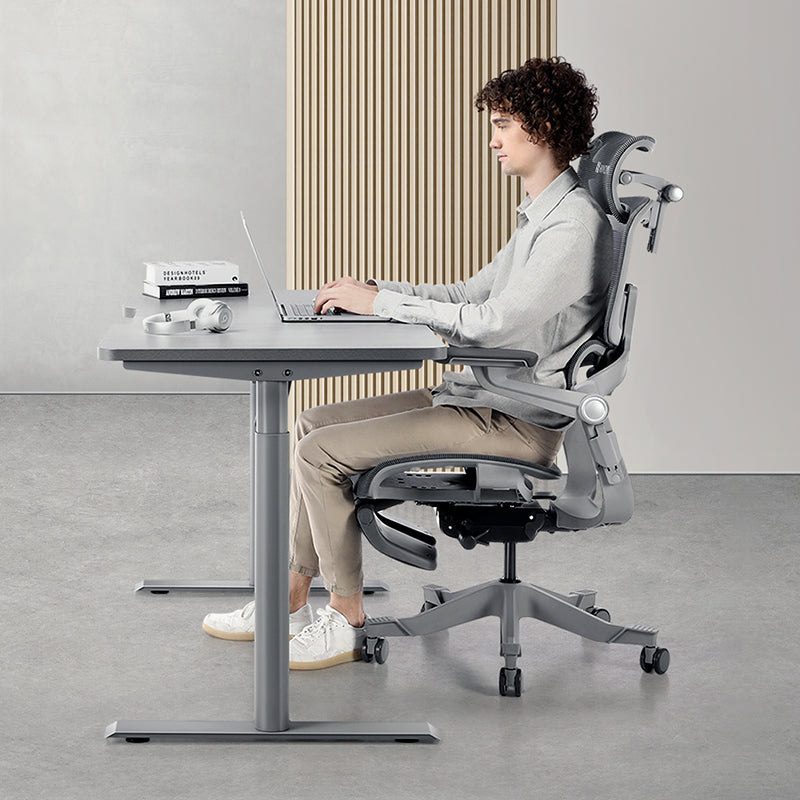


Heat and humidity can change how you sit. When warmth and moisture build up between you and the chair, many people shift more, perch further forward or sit away from the backrest, though everyone reacts a little differently. A breathable chair can help, but in Singapore's year-round humidity, staying comfortable through a long session comes down to three things working together: a chair that fits, decent airflow around the desk and a habit of changing position before you feel you have to.
Sound familiar? The setup that felt great at 10am in an air-conditioned room feels oddly wrong by 3pm, and you haven't touched a single lever.
How heat can change the way you sit
Plenty of people notice a pattern. As the room warms up, you might peel away from the backrest to let air reach your back. You might slide towards the front edge of the seat. Or you get restless during long focus blocks, like a quarterly report or a tricky bit of debugging, and start shifting every few minutes.
Each change is small. Together, they can pull your lower back away from the lumbar support and let your head and shoulders drift forward. How much that matters varies from person to person, but if you feel stiffer on hot afternoons than on cool ones, it's worth checking how you're sitting.
The frustrating part? Most people blame the chair, adjust the wrong thing and wonder why it's still not right.

Singapore's climate, in desk-worker terms
According to the Meteorological Service Singapore, temperatures here barely change from month to month. Night-time lows usually don't fall below 23–25°C, and daytime highs usually peak around 31–33°C. Relative humidity can top 90% before sunrise and drops to around 60% on dry afternoons, with a mean annual figure of around 82%.
If you're at a desk for hours, that means three things:
- There's no cool season to reset in. Your setup has to cope with warmth twelve months a year.
- Sweat doesn't evaporate easily. In humid air, moisture between your back and the chair lingers, which is why contact areas feel sticky even when the room isn't that hot.
- Air-con is the real dividing line. The same chair can feel completely different in a chilly office tower and in an HDB bedroom with only a fan running.
Plenty of people working from home switch between the two to keep electricity bills in check. The National Environment Agency's energy-saving tips suggest setting the air-con at 25°C, and running it for about an hour before switching to a fan to keep the room cool. From a posture point of view, it's worth scheduling your most demanding focus work for when the room's coolest.
| Working condition | What you might notice | What helps |
|---|---|---|
| Air-con on, around 25°C | Little heat drift; sitting too still becomes the bigger issue | Keep changing position even though you feel comfortable |
| Fan only, morning | Fine at first, stickiness builds slowly | Aim the fan across your back and seat; check lumbar contact mid-morning |
| Fan only, afternoon | Some people perch forward, fidget or feel shoulder tension | Shorter work blocks, more position changes, a light controlled recline |
| Small room, door closed | Heat builds quickly around the desk | Keep the airflow path clear and don't pile things behind the chair |
Breathable material or better fit: which matters more?
You need both, and they don't do the same job. Breathable materials deal with heat at the contact points. Fit keeps you aligned. A cooler backrest won't help if your seat's set too deep or the lumbar pad sits at the wrong height, and ideal geometry won't stop you peeling away from a backrest that traps heat.
So which comes first? Fit. Get seat height, seat depth and lumbar position right, then let material refine things. A chair that fits well and runs a little warm is easier to live with than a cool one that doesn't fit at all. Our piece on the benefits of a mesh office chair explains why open-weave backs are so popular in warm climates.
How the Hinomi range handles a warm room
Every chair in the current range has mesh somewhere at the back, so the bigger difference is the seat. That's where most of your weight and contact area sits.
- Mesh seat and back: the H2 Pro uses a velvet-textured mesh that's breathable and soft to the touch, and the X2 Pro pairs a mesh seat with a contoured 4-panel backrest. If you work fan-only most afternoons or simply run hot, these let the most air through where you're sitting.
- Cushioned seat, mesh back: the Q2 has a mesh backrest and headrest over a cushioned seat. The H2 Classic has a mesh backrest with a seat of molded foam and latex, plus a latex-filled headrest.
- More cushioning, petite-friendly: the Q2 Pro has mesh on the headrest and upper backrest, with cushioning at the seat and lumbar support. It suits shorter users and people who like a softer feel.
Cushioned seats feel lovely when the air-con's on. In a hot room without air-con, they can feel warmer than open mesh by mid-afternoon, so plan a few more position changes if that's your setup. And if you're petite, fit should still lead the decision: the Q2 Pro's lower seat and shorter seat depth will usually matter more to your posture than a few degrees of seat temperature.
Small habits that beat the afternoon slump
Most of what helps doesn't cost anything.
- Aim the fan lower. Air moving across your back and the seat does more than air on your face.
- Rotate positions on purpose. Move between upright, a light recline and (where useful) a forward-tilted seat rather than holding one posture. The H2 Pro and X2 Pro both have a 2.5° forward-tilting seat for close work.
- Get up before you need to. Stand or walk briefly every 30–60 minutes. Our guide on how often to stand up goes into the detail.
- Re-check seat depth and lumbar when you feel warm. That's when drift starts, so it's the right moment for a 10-second reset.
- Dress for the home office. Breathable, low-friction clothing makes small shifts easier.
Don't overlook a short recline. Leaning back lightly lets air reach your back and moves pressure off the hottest contact points. If your chair has adjustable recline tension (the H2 Pro, X2 Pro and H2 Classic do), set it so the backrest moves smoothly without you having to push hard. Reclining for a minute is different from slumping, which pulls you off the lumbar support.
When the problem isn't the heat at all
Sometimes heat only makes a fit problem you've already got more noticeable. A few patterns to watch for:
- Comfortable in the morning, uncomfortable by afternoon? That's often heat drift plus long static blocks. Move more often and re-check back contact.
- If your shoulders tire faster when it's warm, check your arm support and mouse distance too. They're quick to adjust, and the heat may not be the only factor.
- Lower back support that feels inconsistent tends to come from sliding forward as you get warm. Reset seat depth and lumbar depth after you notice it.
- A sudden, constant urge to stand up means discomfort is setting your breaks for you. Schedule them before it arrives.
If you work in a compact room, layout matters too. Our small-space ergonomics guide covers clearances and airflow around the desk.
Keeping a chair fresh in a humid climate
Sweat and skin oils build up on chair surfaces faster here than in drier places. A little routine care goes a long way:
- Wipe mesh and armrest pads with a lightly damp cloth, then let the chair air-dry with the fan on or a window open.
- Brush or vacuum mesh weekly so dust doesn't trap moisture in the weave.
- Spot-clean cushioned seats instead of soaking them, since padding's slow to dry.
- If a room stays shut for days, air it out now and then so the chair isn't sitting in still, damp air.
- Skip harsh chemicals on mesh and fabric, and follow the care guidance for your model.
Frequently asked questions
Is a mesh chair enough if I work from my HDB flat without air-con?
A mesh seat and back can help, because air passes through and moisture is less likely to build up against you. On their own, though, they're not the whole answer. Pair the chair with a fan aimed across your back and seat, shorter work blocks in the afternoon and regular position changes. Fit still matters most, since a poorly adjusted mesh chair will feel wrong too.
What air-con temperature should I use when working from home in Singapore?
The National Environment Agency suggests 25°C as an energy-saving setting, and many people find it comfortable for desk work. It also suggests running the air-con for about an hour and then switching to a fan. If you go fan-only in the afternoon, expect more posture drift and plan for more frequent breaks and position changes.
Why does my back feel worse on humid days?
Feeling hot may make you shift away from the backrest or perch forward, and sticky contact areas can make you less inclined to move. Not everyone notices this, but if you do, it's a setup issue you can work on. Check seat depth and lumbar contact first, then improve airflow.
Are cushioned seats a bad idea in Singapore?
Not at all. Cushioned seats are comfortable in air-conditioned rooms, and many people prefer the softer feel. In a warm, fan-only room they can feel warmer than mesh by mid-afternoon, so build in more movement. A mesh back with a cushioned seat, like the Q2 or H2 Classic, gives you airflow where you sweat first with softness underneath.
Can I feel the different materials before buying?
Yes. The Hinomi showroom at 12 Kallang Ave, #03-01, Aperia Mall is open daily from 11am to 8pm, close to Lavender and Bendemeer MRT. You can sit in chairs, compare how mesh and cushioned seats feel, and get fitting advice from staff. If you buy online, you also get 30-day returns from the date you receive the chair.
A three-step plan for warmer days
- Lock in your fit. Seat height, seat depth, lumbar position and armrests first, because no material can make up for a chair that doesn't fit.
- Get the air moving. Point a fan across your back and seat, and save your hardest focus work for the coolest part of the day.
- Change position before discomfort tells you to. Note when the stickiness usually starts, then set a reminder to stand, stretch or recline a few minutes earlier.
If you're weighing up mesh and cushioned seats, the chair comparison page sets the whole range side by side, and you're welcome to drop by the Aperia Mall showroom to feel the difference for yourself.