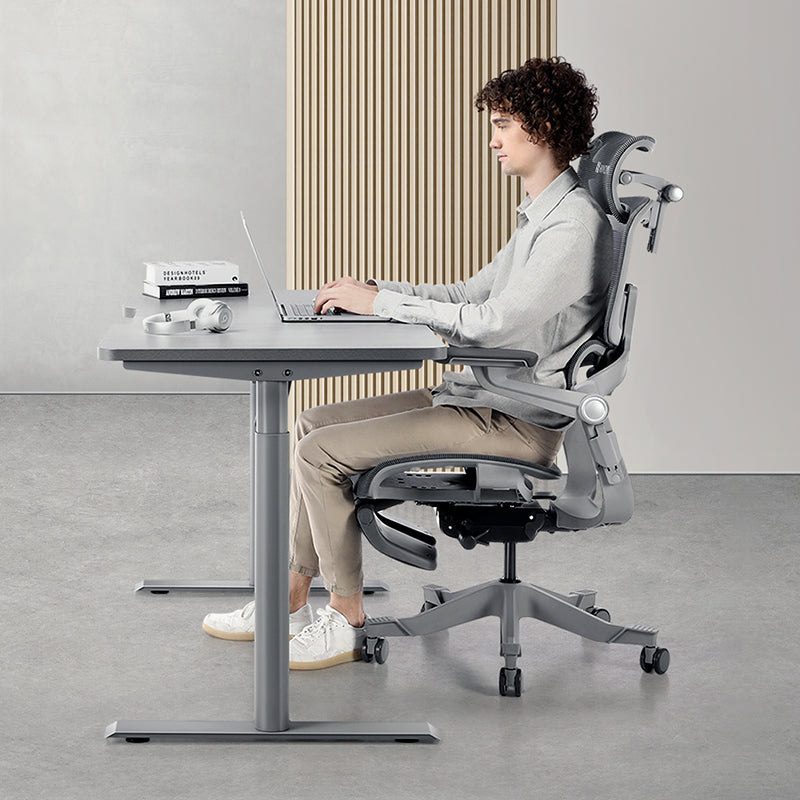


Neither is better for everyone. In Singapore's warm, humid climate, many people find a mesh seat cooler if they work without air-con or tend to run hot, because air can move through it and it's less likely to trap heat and moisture underneath you. A foam or cushioned seat suits you if you like a softer feel and spend most of your day in air-conditioned rooms. Either way, it's worth getting the fit right first, since the "right" material can't make up for a chair that doesn't suit your body.
What you're really choosing between
Ever chosen a chair after a two-minute sit in a shop? Most of us have. That'll mostly tell you how soft the surface feels on contact. It doesn't tell you how pressure spreads after three hours of back-to-back video calls, how the seat responds when you shift, or how it behaves once the room warms up.
So treat material as a comfort preference that sits on top of fit, not instead of it. Here's how the two compare in general.
| Factor | Mesh seat | Foam or cushioned seat |
|---|---|---|
| Feel | Firmer and springy, with clear feedback as you move | Soft and contouring; often comfortable straight away |
| Airflow | High; air passes through the weave | Lower; padding tends to hold more warmth |
| Fan-only room | Often feels cooler for longer | Can feel warm and sticky over a long session |
| Air-conditioned room | Comfortable; some people find it a little cool | Comfortable and cosy |
| Cleaning | Brush or wipe; dries quickly | Spot-clean; padding takes longer to dry |
Why people love a cushioned seat
It's familiar. That soft, sink-in sensation is what most of us associate with comfort, and many people find a good cushioned seat comfortable straight away. Quality foam also moulds around your thighs and sit bones, and many people find that pleasant over long hours.
It's at its best in a cool room. If you're in a strongly air-conditioned office tower, or your home study runs the air-con through the afternoon, a cushioned seat can feel warmer and cosier than mesh. That's a plus, not a drawback.
Why mesh is so popular here
Air. The open weave lets air reach the seat and back, which many people appreciate when humidity rarely dips. Mesh is also easy to live with: crumbs brush off, spills don't soak into padding, and it dries quickly after a wipe.
Some people also like the firmer, more responsive feel. It gives you clearer feedback as you move, which can make you more aware of slouching during a long debugging session or a stretch of financial modelling. Find it too firm at first? Plenty of people do, and neither reaction is wrong. Our article on the benefits of a mesh office chair goes deeper into the material itself.

Where you sit matters more than you'd think
In many countries, mesh versus foam is partly a seasonal question. Here it's a daily one. The Meteorological Service Singapore notes that temperatures vary little through the year and that mean annual relative humidity is around 82%, rising above 90% before sunrise. There's no cool season to balance out a warm seat.
So it's worth thinking about where you actually spend your hours:
- Office towers with strong air-con: both materials work well, and plenty of people enjoy a cushioned seat in a chilly office. Go by feel.
- An HDB flat or condo with the fan on: plenty of people find mesh feels cooler through the afternoon, especially at the seat and along the back.
- Hybrid weeks: where do you sit most? For a lot of people it's the home chair that faces the heat, so that's the one to choose for.
Humidity affects care, too. Padding holds moisture longer than open mesh, so cushioned seats are happiest in a ventilated room and should be spot-cleaned rather than soaked. Mesh dries fast but still collects dust and skin oils, so give it a weekly brush and a wipe with a damp cloth. For more on heat and posture, see how breathability and humidity affect long-session comfort.
The Hinomi range, by seat type
You'll find both camps in the current range. The H2 Pro and X2 Pro have mesh seats. The Q2, Q2 Pro and H2 Classic have cushioned seats, each with mesh at the back for some airflow behind you.
| Chair | Seat | Back and headrest | Worth a look if |
|---|---|---|---|
| H2 Pro | Velvet-textured mesh, 2.5° forward tilt | Mesh 2-panel backrest; headrest adjusts in depth, pivot and surface angle | You want a mesh seat and lots of fine-tuning (19 adjustment points) |
| X2 Pro | Mesh, wider seat, 2.5° forward tilt | Mesh, contoured 4-panel backrest | You want fuller back coverage or more room in the seat |
| Q2 | Cushioned | Mesh 3-panel backrest and mesh headrest | You want a cushioned seat and core adjustments at an entry-level price |
| Q2 Pro | Cushioned, with a lower seat height and shorter seat depth | Mesh upper backrest and headrest; cushioned lumbar support | You're petite, or you like softness at both the seat and lower back |
| H2 Classic | Molded foam with latex | Mesh backrest; latex-filled headrest | You want cushioning at the seat and headrest, plus synchronised recline |
A few pointers. If you're petite, start with the Q2 Pro: its lower seat height and shorter seat depth can make it easier to sit back against the support, so compare those measurements with your own before worrying about material. If you're tall or broad, the X2 Pro's wider seat and deeper seat adjustment are worth comparing with the H2 Pro, and check that you're within the listed weight limit (150 kg for both). The H2 Classic is a good fit if you like a padded seat and head support plus a recline where the seat slides forward as the backrest moves through 100°–140°. And the Q2, our Best Value Ergonomic Chair, keeps a breathable back over a softer seat at an accessible price.
Is it the material, or the way the chair is set up?
Not loving your seat? Sometimes the setup is the issue rather than the material. Before you blame the mesh or the foam, these are worth checking:
- Pressure behind your knees? Check seat depth first. Try a gap of two or three fingers between the seat edge and your knees and see whether it feels better on either material.
- Sore sit bones or hips after a long session? Try changing position more often: recline briefly, shift your weight, stand for a minute. Movement can help whatever the surface.
- Lower back discomfort? Check lumbar height and depth before you change upholstery. Our guide to lower back pain after long sitting shows what to adjust first.
- Tired shoulders? Check armrest height and how far you're reaching for the mouse.
Set the chair up properly before you judge the material, otherwise you're comparing two badly adjusted chairs. Our guide to ergonomic chair materials explains how each upholstery type works with the chair's structure.
How to give a chair a fair test
Two minutes of sitting still won't tell you much about hour six. Try this 20-minute sequence instead, at a showroom or at home within a return window:
- 5 minutes upright. Sit in a neutral posture and notice the seat and back contact.
- 10 minutes of real work. Type, use the mouse, answer emails. Copy your normal day as closely as you can.
- 3 minutes reclined. Lean back lightly. A good chair supports movement as well as stillness.
- 2 minutes back upright. Notice how your body feels after the change.
While you're at it, pay attention to your thighs, the backs of your knees, whether your lower back stays in contact with the lumbar support, and whether your shoulders stay relaxed. Then give a new chair a week at home before deciding. Many people find a new chair takes a few days to get used to, and Hinomi's 30-day returns give you time to judge it properly.
Frequently asked questions
Is mesh or foam better for working from home in Singapore?
If you work from an HDB flat or condo without air-con for most of the day, many people find mesh more comfortable because air can pass through it, so it's less likely to feel sticky against your back and thighs. If your home office is air-conditioned and you prefer a softer feel, a cushioned seat works well. A mesh back with a cushioned seat is a sensible middle ground.
Can I compare mesh and cushioned seats in Singapore before buying?
Yes. The Hinomi showroom is at 12 Kallang Ave, #03-01, Aperia Mall, open daily from 11am to 8pm and close to Lavender and Bendemeer MRT. You can sit in chairs, feel the different seat types for yourself and get fitting advice from staff. Wear the kind of clothes you usually work in for a fairer test.
Is a cushioned seat a good choice for long working hours?
It can be. Quality foam feels soft from the start, which many people enjoy across a long workday. It's at its best in cooler, air-conditioned spaces. In a warm, fan-only room it can feel hot by mid-afternoon, so take regular movement breaks or choose a model with a breathable mesh back.
Is mesh easier to keep clean in a humid climate?
Generally, yes. Mesh can be brushed or wiped and dries quickly, while padding absorbs spills and holds moisture for longer, which matters in Singapore's humidity. Whatever the material, clean gently with a lightly damp cloth, avoid soaking anything, and let the chair air-dry in a ventilated room with the fan on or a window open.
What matters more for back comfort: material or adjustment?
Start with adjustment. Seat height, seat depth, lumbar position and armrest height shape how the chair supports you through the day, and seat material is a refinement on top of that. A different material can't make up for a chair that doesn't fit your body. Get the setup right first, then choose the feel you prefer.
Your three-step plan
- Decide where you'll sit most. Fan-only home office or air-conditioned office? That one answer narrows the choice quickly.
- Check fit before feel. Make sure the seat height, seat depth and weight range suit your body, then compare materials.
- Test with real work. Run the 20-minute sequence, then live with the chair for a week before you judge it.
If you're still torn, the chair comparison page lays out the mesh and cushioned options side by side, and you can always drop by the Aperia Mall showroom to sit in them before you decide.